

The Ultimate Guide to Comforters, Duvets, and Quilts
Wait…and think, when was the last time you deliberately picked your comforter, duvet, or quilt?
For many, the answer is probably never. It came with a bedding bundle or a king size bed, or maybe it was on sale. That usually works until it doesn't.
Maybe you wake up feeling too warm. Maybe the bed never quite looks the way you want it to. Maybe laundry day feels like a chore because your bedding is a nightmare to clean.
Small frustrations add up. And often, the bedding is the reason.
The good news is, once you understand the difference between these three options, the right choice becomes obvious pretty quickly.
How?
Let's get into it.
First, the Difference
This is where most guides overcomplicate things. But we tried to keep it simple.
-
Comforter
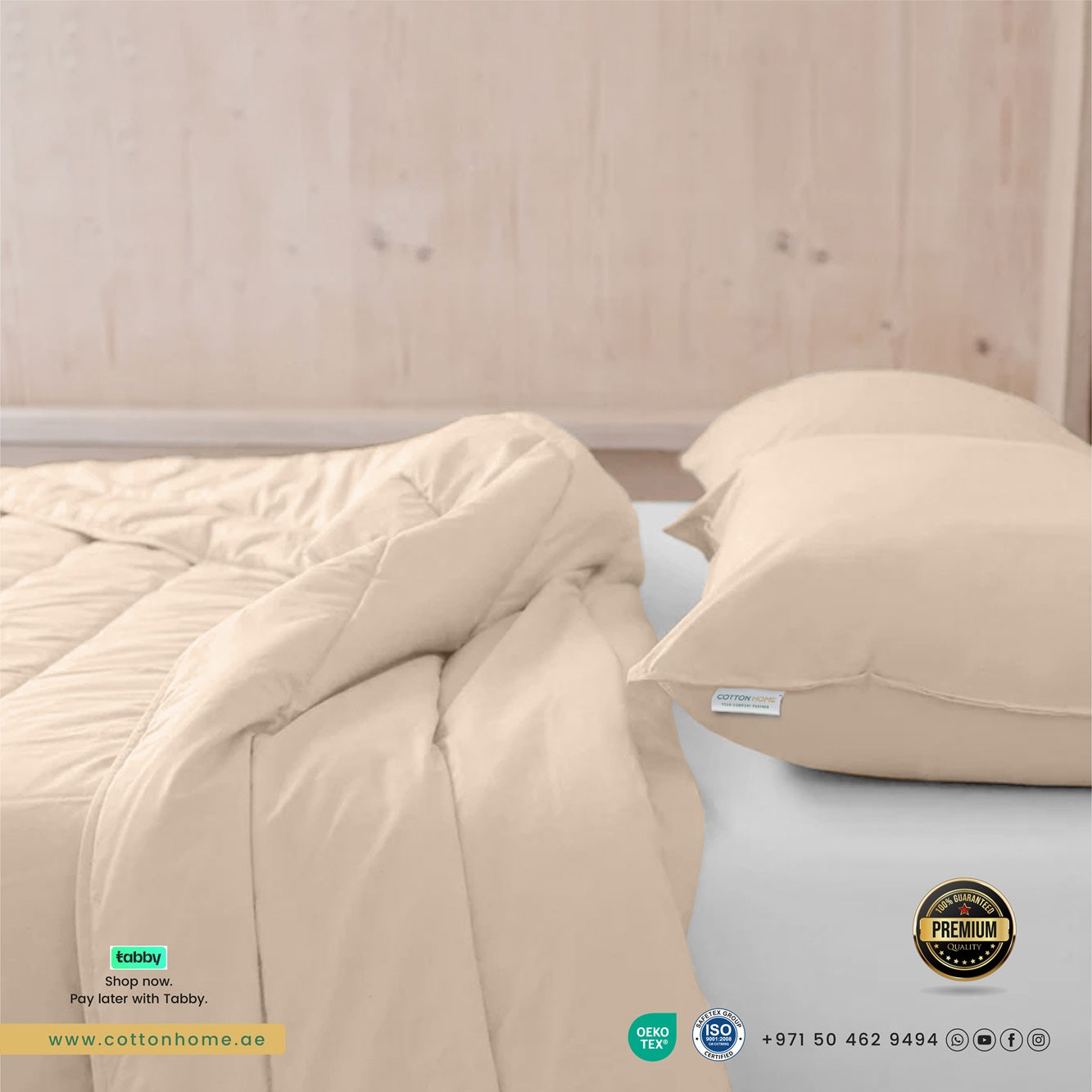
A comforter is one complete piece.
The filling is stitched inside, which keeps everything in place. You put it on the bed and use it immediately. No additional cover is required. It's straightforward, familiar, and popular for a reason.
-
Duvet
A duvet consists of an insert that goes inside a separate cover.
The insert provides warmth. The cover provides the look. If you want a different color, pattern, or texture, you can swap the cover instead of replacing the entire duvet.
-
Quilt
A quilt is thinner and lighter than both a comforter and a duvet.
It usually contains three layers sewn together in decorative patterns. Quilts work especially well in warm climates or as part of a layered bedding setup.
That's it.
Three options. Very different in how they feel, how you care for them, and how well they work for different sleepers.
How to Know Which One Is Right for You
Before picking, answer these honestly:
-
Do you sleep hot or cold?
-
What's your climate like across seasons?
-
How much time do you want to spend on laundry and upkeep?
-
Do you prefer one heavy layer or multiple lighter ones?
-
What size is your bed, a full-size mattress, a king size bed, or something else?
Your answers point clearly to one of the three.
Here's how.
Comforters
What does a comforter do well?
A comforter is the most straightforward choice of the three.
You buy it. You put it on the bed. You sleep under it.
No extra covers, no separate pieces, nothing to figure out.
If you've ever stayed in a hotel and thought, "I just want my bed to feel like this," that's usually a well-chosen comforter doing exactly what it's supposed to do.
For whom is it made?
-
People who want an easy, low-maintenance option.
-
Colder climates where you need real warmth through the night.
-
Anyone building a complete bed and pillows setup who wants everything to match.
What to be aware of?
Comforters can't easily be adjusted for temperature. What you buy is what you get. If your climate shifts significantly between seasons, you might find yourself too warm in summer and perfectly comfortable in winter, or the other way around. Also, washing a comforter isn't always easy. Many need a large machine or professional cleaning, depending on size and fill.
Also, a comforter sized for a full size mattress won't hang right on a king size bed. Always size up slightly if you want proper drape over the sides, it makes the bed look and feel more complete.
Duvets
What does a Duvet do well?
A duvet is essentially a blank canvas.
The insert provides warmth. The cover provides everything else, texture, color, and style.
Want to change how your bed looks? Swap the cover.
Does the duvet itself need cleaning? The insert goes in, the cover comes off, and it washes easily.
It's the most practical long-term choice for most people.
For whom is it made?
-
People who like changing up their bedroom look without buying new bedding.
-
Warmer climates where you want lighter warmth with easy washing.
-
For anyone who sweats during sleep, the cover can be washed weekly without touching the insert.
-
King-size bed owners who find large bedding hard to wash, the cover handles it.
What to be aware of?
The duvet insert can shift inside the cover over time. Quality covers have corner ties to hold it in place, always check for these before buying.
Also, buying the insert and cover separately means two purchases. Factor that into the budget upfront.
A Note on Fill Power
For duvets specifically, fill power matters.
Higher fill power means the same warmth with less weight. If you run warm but still want coverage, a high fill power duvet lets you stay comfortable without feeling buried. For a king size bed, especially, weight adds up, lighter fill power makes a noticeable difference in how the bed feels.
Quilts
What a Quilt Does Well?
A quilt is the lightest of the three.
It's not trying to be your primary source of warmth, it's a layer. A finisher. Something that feels comfortable without making you overheat.
If you live somewhere warm, or you're a hot sleeper who still wants something over you at night, a quilt is almost always the right answer.
Who It's Best For?
-
Hot sleepers who get uncomfortable under heavy coverage.
-
Warmer climates where a full comforter or duvet would be too much.
-
People who like to layer, a quilt over a lighter blanket gives you flexibility through the night.
-
Anyone who wants something easy to wash frequently.
What to Watch Out For?
A quilt won't replace a comforter or duvet in cold weather. If your winters are genuinely cold, a quilt alone won't be enough.
Also, the decorative stitching on quilts can wear over time. Check the stitch quality before buying, especially if you plan to wash it often.
Bed Size Matters More Than You Think
Many people focus on material and forget about sizing.
Then the bedding arrives and doesn't look right.
A comforter that feels generous on a full-size mattress can look undersized on a king-size bed. Coverage becomes uneven. The drape disappears. Sharing the bed becomes less comfortable.
For king beds, it's often worth choosing slightly larger dimensions whenever possible.
A little extra coverage can dramatically improve both comfort and appearance.
|
Bed Size |
What to Look For? |
|
Full size mattress |
Standard or full/queen size coverage, check drape on the sides |
|
King size bed |
King-specific sizing, always go larger if between sizes |
|
Queen |
Queen sizing, most widely available across all three types |
And it's not just about coverage. A king size bed deserves a properly weighted, well-filled layer that matches the scale of the bed. A lightweight quilt on a large bed can look, and feel, undersized.
Bed and Pillows
Here's something that often gets skipped.
Your comforter, duvet, or quilt doesn't exist in isolation. It's part of a complete sleep surface, and your bed and pillows need to work as a system, not as separate purchases.
A heavy comforter paired with a flat, unsupportive pillow means one half of your sleep setup is working against the other.
You're warm enough, but your neck isn't supported. Or your pillow is perfect, but you're kicking off a comforter that's too thick.
When your bed and pillows are chosen together:
-
The warmth level matches how your body sleeps
-
The height and support of pillows complement the weight of your top layer
-
The visual look of the bed actually comes together
It's the difference between a bed that just functions and a bed that genuinely feels good to get into.
Care and Maintenance
Whichever you choose, how you care for it determines how long it lasts.
Comforters:
Wash every 1–2 months. Use a large-capacity machine on a gentle cycle. Dry thoroughly, any moisture left inside the fill leads to clumping and odor.
Duvets:
Wash the cover weekly, the insert every 2–3 months. The insert needs to be completely dry before going back in the cover.
Quilts:
Easiest to maintain. Most can be machine-washed regularly. Air dry when possible to preserve the stitching.
One tip that works for all three, give them a good shake and air them out once a week. It refreshes the fill, removes moisture, and keeps the bed feeling fresher between washes.
Final Thought
Comforters, duvets, and quilts all do the same basic job, but they do it differently. And the difference matters every single night.
The right choice isn't the most expensive one or the most popular one. It's the one that matches how you sleep, where you live, and what kind of bed you have, whether that's a full size mattress or a king size bed.
Get that right, pair it with the right bed and pillows, and your sleep setup stops being something you tolerate and starts being something you actually look forward to.
That's a small change worth making.
FAQs
1. What's the main difference between a comforter and a duvet?
A comforter is used as-is. A duvet goes inside a removable, washable cover. Duvets are more flexible; comforters are simpler.
2. Does a king size bed need a king size comforter?
Yes, and sometimes sizing up is worth it. A properly fitted layer makes a king size bed look and feel complete.
3. Can a quilt work on a full-size mattress year-round?
In warm climates, yes. In colder weather, pair it with a blanket or lighter duvet insert for the extra warmth.
4. How does fill type affect my bed and pillows setup overall?
Fill affects weight and warmth. Heavier fills pair better with firmer, more supportive pillows. Lighter fills give you more freedom to layer without the bed feeling too heavy.
5. How often should I replace my comforter, duvet, or quilt?
Every 5–10 years, depending on quality and care. If it's clumping, losing shape, or no longer keeping you at a comfortable temperature, it's time to replace it.





Leave a comment