

Better Sleep, Better School Days – Is Your Child Getting Enough Rest?
School mornings have a way of making bedtime feel more important.
The alarm goes off early, the uniform needs to be found, breakfast has to happen, and somehow everyone needs to leave the house on time.
That is why sleep deserves a place on the back-to-school checklist.
Children aged 6 to 12 generally need 9 to 12 hours of sleep each day. Teenagers need around 8 to 10 hours. Getting enough sleep can support concentration, attention and school performance.
But how do you know whether your child is actually getting enough?
Start With Their Morning
Some children wake up ready to talk before their parents have even had coffee.
Others need three alarms, two reminders and a fair amount of negotiation.
If getting out of bed has become unusually difficult, look at the bedtime routine first. A child who regularly goes to sleep late may simply not be getting enough hours before the morning begins.
The same applies if they seem tired again shortly after waking.
Watch What Happens During the Day
Sleep problems do not always look like falling asleep at the desk.
Your child might struggle to concentrate on homework, become unusually irritable or find it harder to stay focused on something they normally enjoy.
That matters during the school term. The CDC links adequate sleep with better focus, concentration and academic performance, while insufficient sleep is associated with attention and behaviour problems.
You may notice smaller things first.
Perhaps homework takes longer than usual. Perhaps they are constantly tired after school. Or maybe they seem perfectly fine until late afternoon, when their energy suddenly disappears.
Bedtime Can Tell You a Lot
A bedtime that keeps getting pushed back by another 20 minutes can make a bigger difference than it seems.
There is always something else to do. One more cartoon. One more game. One more chapter.
During school holidays, that flexibility is easier to manage. Once school starts, the same routine can leave children short on sleep night after night.
A regular bedtime is useful for exactly this reason. Recent U.S. data found that about 86% of children aged 2–17 had a regular bedtime most days or every day in 2024.
The Bedroom Matters Too
Once the sleep schedule is sorted, take a look at the bed itself.
Is the mattress still comfortable? Does the fitted sheet stay where it should? Is the duvet too warm? Does the pillow suit the way your child sleeps?
These are ordinary questions, but they are easy to overlook.
Temperature deserves attention as well. Research involving school-aged children has found associations between bedroom temperature and sleep, with both overly warm and overly cold conditions linked with poorer sleep.
Bedding also affects the little environment around the body. A 2024 systematic review found that bedding and sleepwear fibres can influence thermal comfort and sleep, although the research does not support a simple rule that one fabric is always better for everyone.
For homes in the UAE, that practical side of bedding matters.
Choose Kids Bedding For Everyday Life
Children do not need complicated bedding.
They need something comfortable, easy to care for and suitable for the way they actually use their bed.
Cotton is a popular choice for everyday bedding because of its familiar softness and breathable feel. More importantly, parents should look at the complete bedding setup rather than choosing a fabric based on one feature alone.
A fitted sheet that stays secure is useful.
A comforter that suits the room temperature is useful.
And a design your child actually likes? That certainly helps when it is time to get them into bed.
Back-to-School Shopping Can Include Bedding
Most parents have a familiar Back to School Essentials list.
School bag. Uniform. Shoes. Stationery. Lunch box.
Bedding does not usually make the first draft, but the start of a new school year is a sensible time to check whether your child's current set needs replacing.
At Cotton Home, our kids' collection includes complete sets that make this easier.
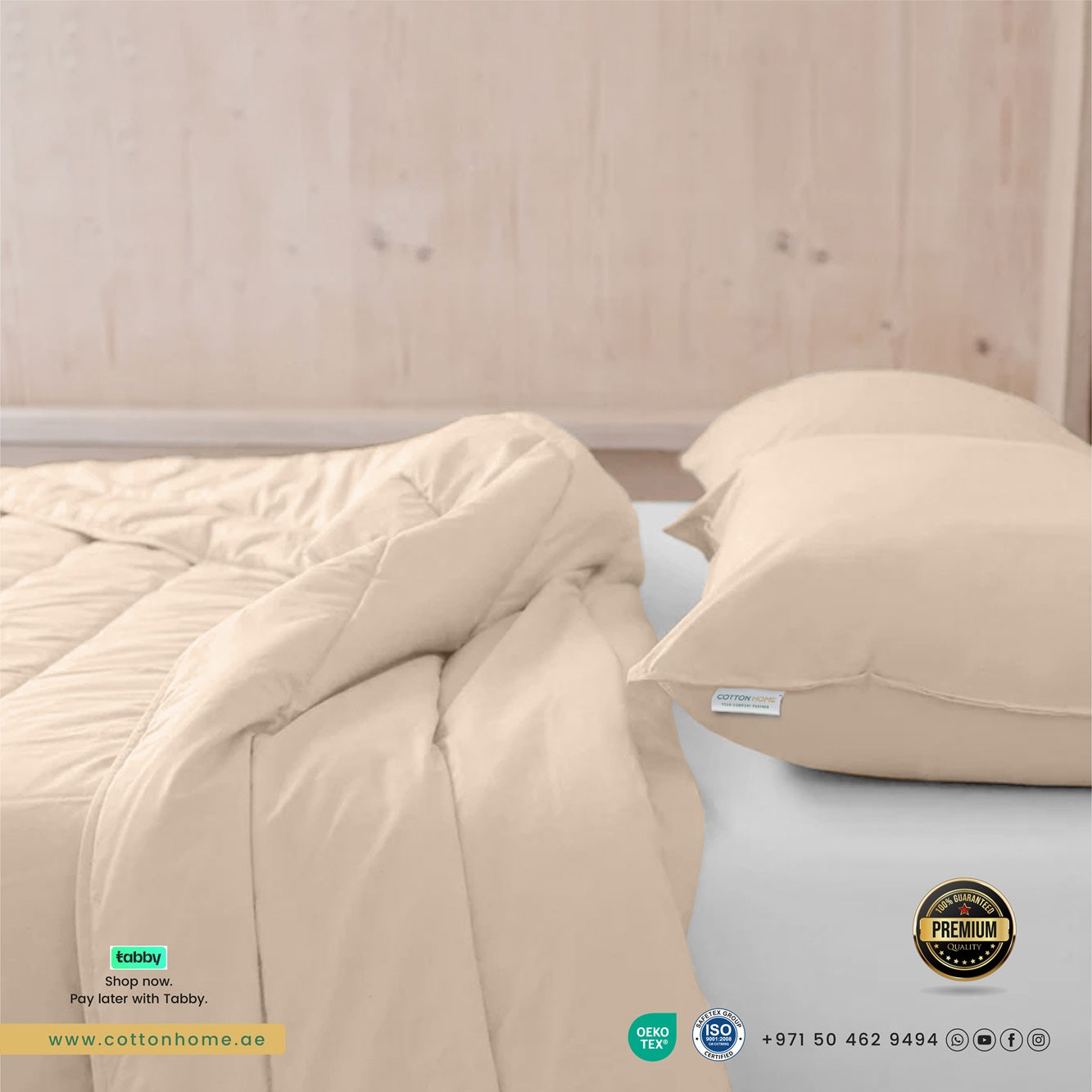
Our premium cotton bedding options bring together pieces such as fitted sheets, comforters and pillow shams, while selected back-to-school bundles include extras such as a children's pencil set.
That makes premium cotton bedding bundles useful for parents who would rather sort out several pieces at once than search for each item separately.
A Few Small Changes Before School Starts
You do not need to completely overhaul your child's routine overnight.
Start by moving bedtime earlier if it has drifted during the holidays. Keep wake-up times fairly consistent, too.
Screens are another obvious place to look. Keeping phones, tablets and other devices out of the bedroom can make the end of the evening less distracting, while a consistent bedtime gives children a clearer signal that the day is winding down.
Then make the bed comfortable.
Not perfect. Just comfortable.
A clean fitted sheet, the right pillow, suitable bedding and a bedroom that is neither too warm nor too cold can make the bedtime routine feel much easier.
Better School Days Start The Night Before
Good sleep is not something children can replace with an extra hour in bed once a week.
The routine matters.
So does the bedroom. And yes, the bed itself deserves a little attention when you are preparing for another busy school year.
Good kids bedding will not solve every sleep problem, but it can make the everyday setup more comfortable.
At Cotton Home, we think that is what back-to-school preparation should be about: getting the practical things right before the first school morning arrives.






Leave a comment